What exactly is Aurora Origins?
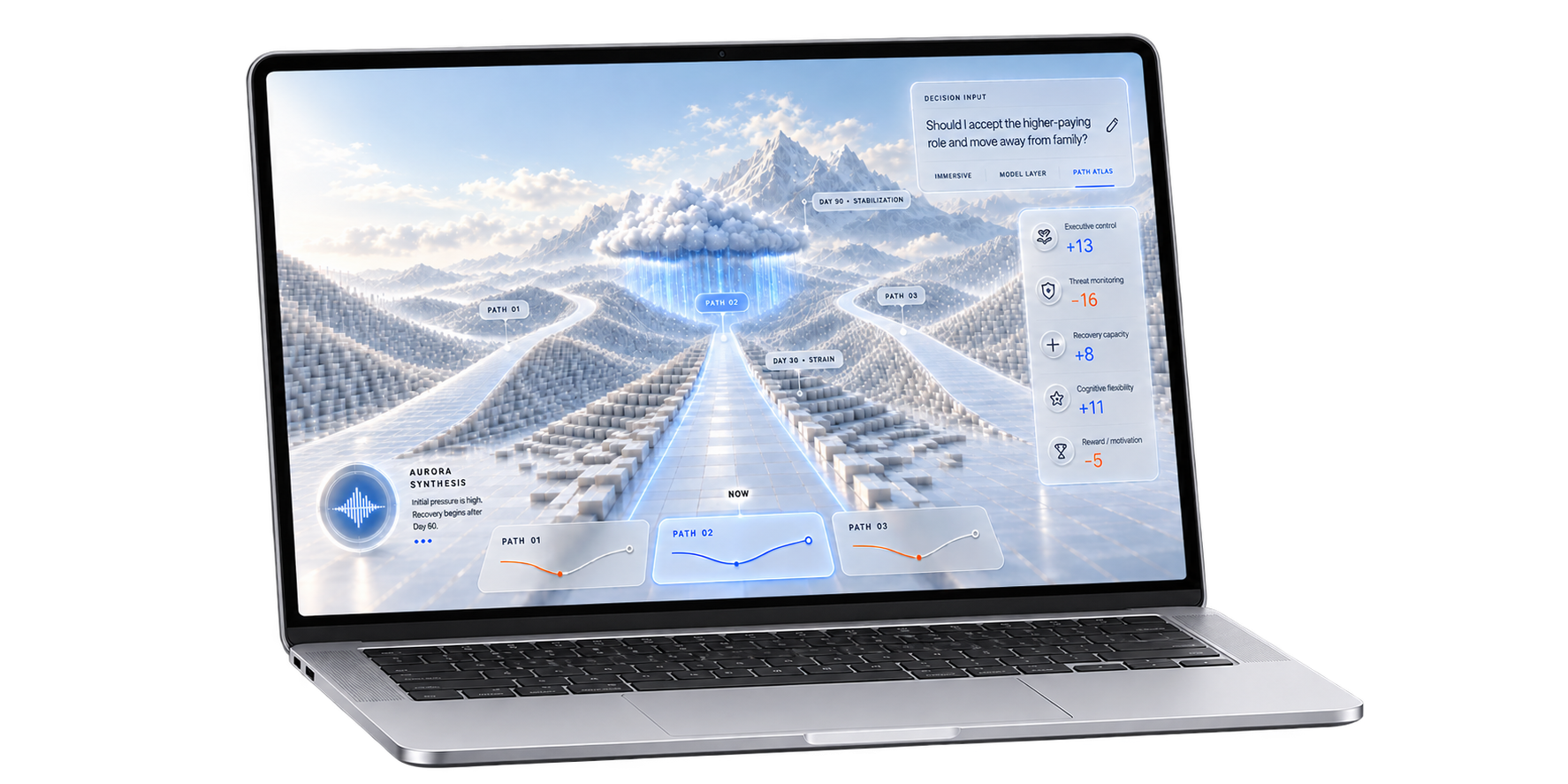
Aurora Origins is the first product built on Aurora Genesis’s personalized human simulation platform. It builds a computational model of you, then uses that model to simulate how you may change under different possible conditions over time. You can ask what happens if you make a specific choice, compare different paths, model what may happen if your current path continues, or start with a destination and explore possible ways of getting there.
Can I start with a destination?
Yes. You can tell Aurora where you want to end up and what matters to you along the way. Aurora can explore possible paths between where you are now and that destination, then run your personalized model forward through those paths so you can compare where they may lead and how living through them may change you.
Can I simulate any choice?
That’s the goal. Aurora is being built to model the person forward, not to support a fixed list of decision categories. You might change one condition or many: take the job, leave it, move, stay, enter a relationship, end one, wait six months, change your workload, negotiate more autonomy, remove a stressor, start a company, or keep living exactly as you are. The question is not simply “What happens if I choose A?” It is: “What happens to me if this becomes the world I keep living in?”
What does Aurora actually simulate?
Aurora does not need to predict the exact meeting you will have on a Tuesday three years from now. It models how a possible path changes the conditions around you, the states those conditions are likely to repeatedly induce, how you tend to respond to them, and how those repeated responses may change your trajectory over time. The output is a simulation of the person moving through the path—not a list of predetermined future events.
Why would the same choice affect two people differently?
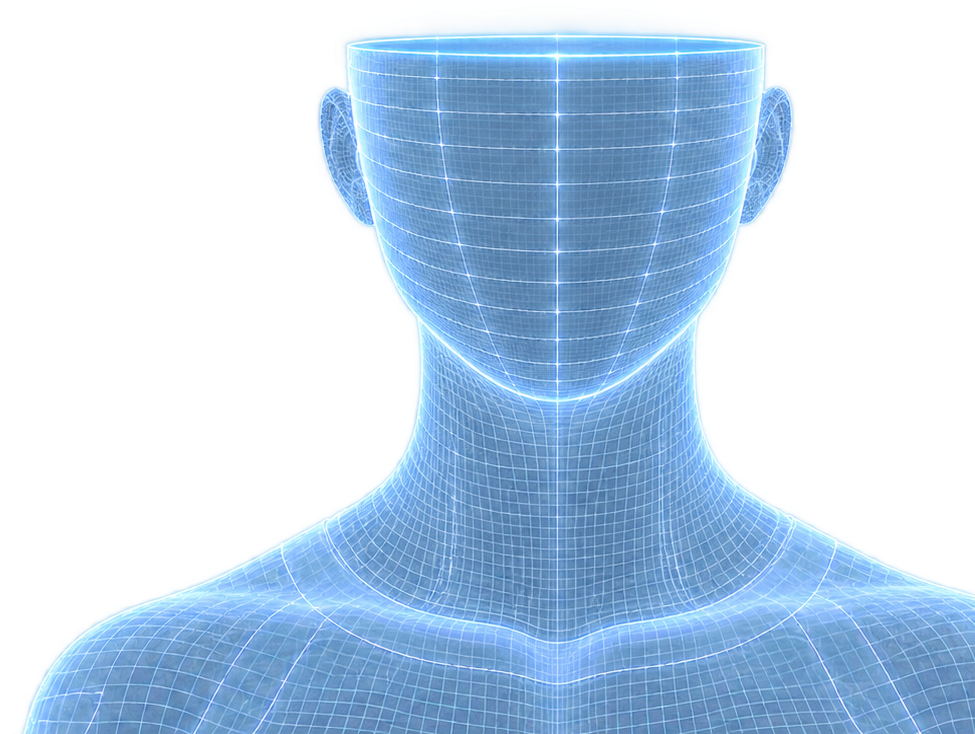
Because Aurora does not treat a path as having one universal outcome. Based on computational neuroscience, Aurora first builds a computational model of a person’s brain, then evaluates the path in relation to that reference model. The same job, relationship, city, workload, opportunity, or uncertainty can stabilize one person and destabilize another. The path is the same. The person entering it is not.
Is Aurora predicting my future?
Aurora models possible futures; it does not claim that one future is destined to happen. Its simulations are probabilistic: they estimate which trajectories appear more or less plausible under the conditions being modeled and where meaningful differences between paths begin to emerge. There can be predictability without predetermination. Your behavior, awareness, and agency can change the conditions of the system, so any modeled future remains conditional rather than fixed. The farther forward a system models, the more uncertainty matters; Aurora is designed to show that uncertainty rather than hide it.
Is this just AI giving me advice?
No. The core product is the model and simulation system. Aurora’s technology can help you interact with the model, ask questions about a simulation, and understand what you are seeing, but the product is not simply generating advice from a prompt. Aurora is being built around a persistent model of the person and the conditions being simulated.
How do you know the model is actually capturing me?
That is one of the central questions we are testing. In early prototype testing, 70 of 74 assessed users reported strong recognition of the output in their lived or cognitive experience. In the current internal benchmark audit, model performance exceeded baseline on 71 of 91 MRI-derived outcomes. Those are early signals, not final validation. Our research program is continuing with larger cohorts and additional testing.
What is Founding Access?
Founding Access is the earliest public version of Aurora Origins. Founding users will be among the first people able to build their model and use Aurora’s Control Room. From there, additional modules will be released progressively as they are ready, including simulation experiences that let users begin testing how Aurora models them forward in time. Because this is an early version, Founding Access users will also help us learn where the model is strongest, where the product needs refinement, and what people most want to simulate before the broader release.